Start in secret
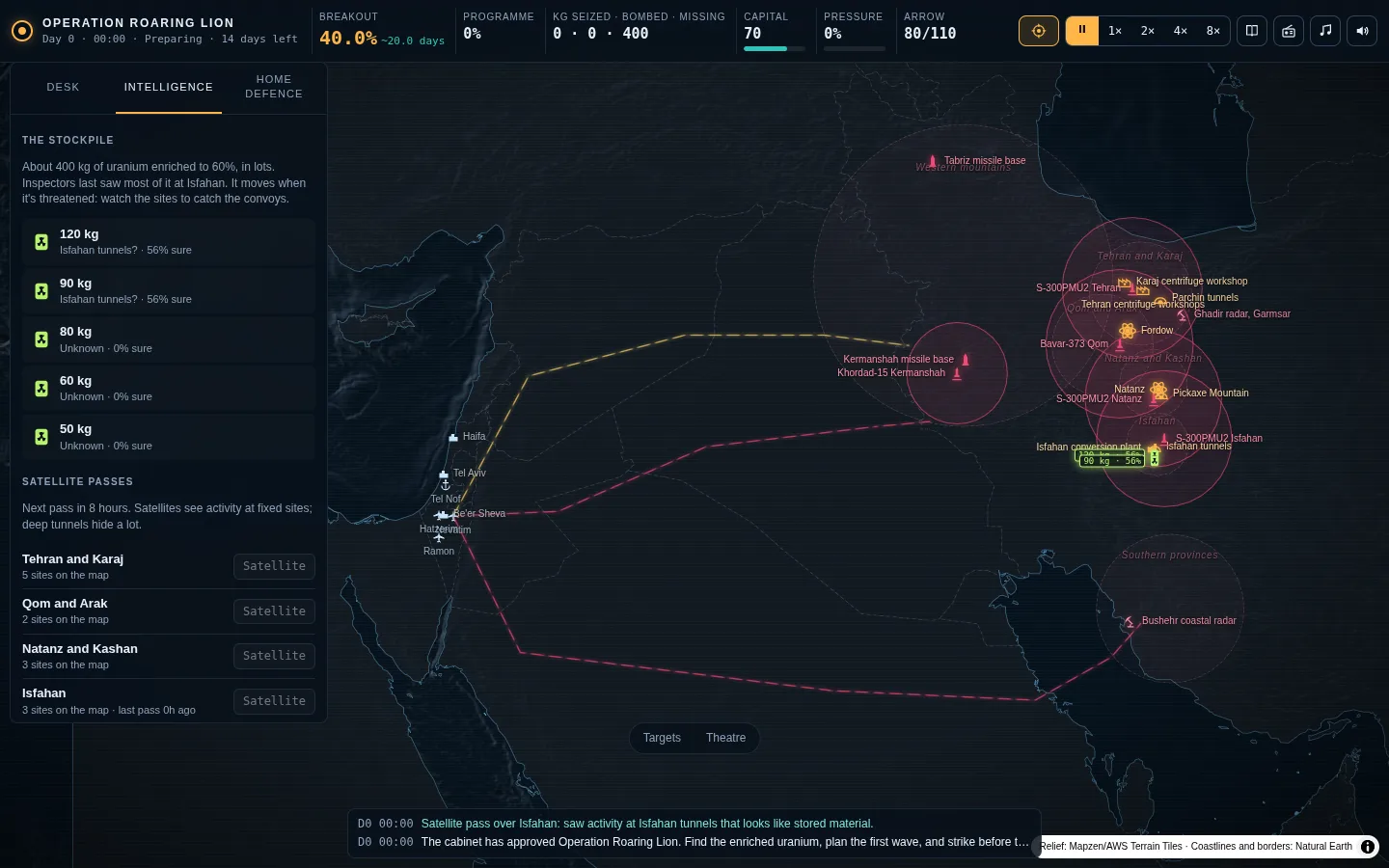
Satellite passes and agents on the ground, while the northern shore doesn't know you're coming. Every day you wait, the chance of a leak goes up. The first wave gets surprise; the second doesn't.
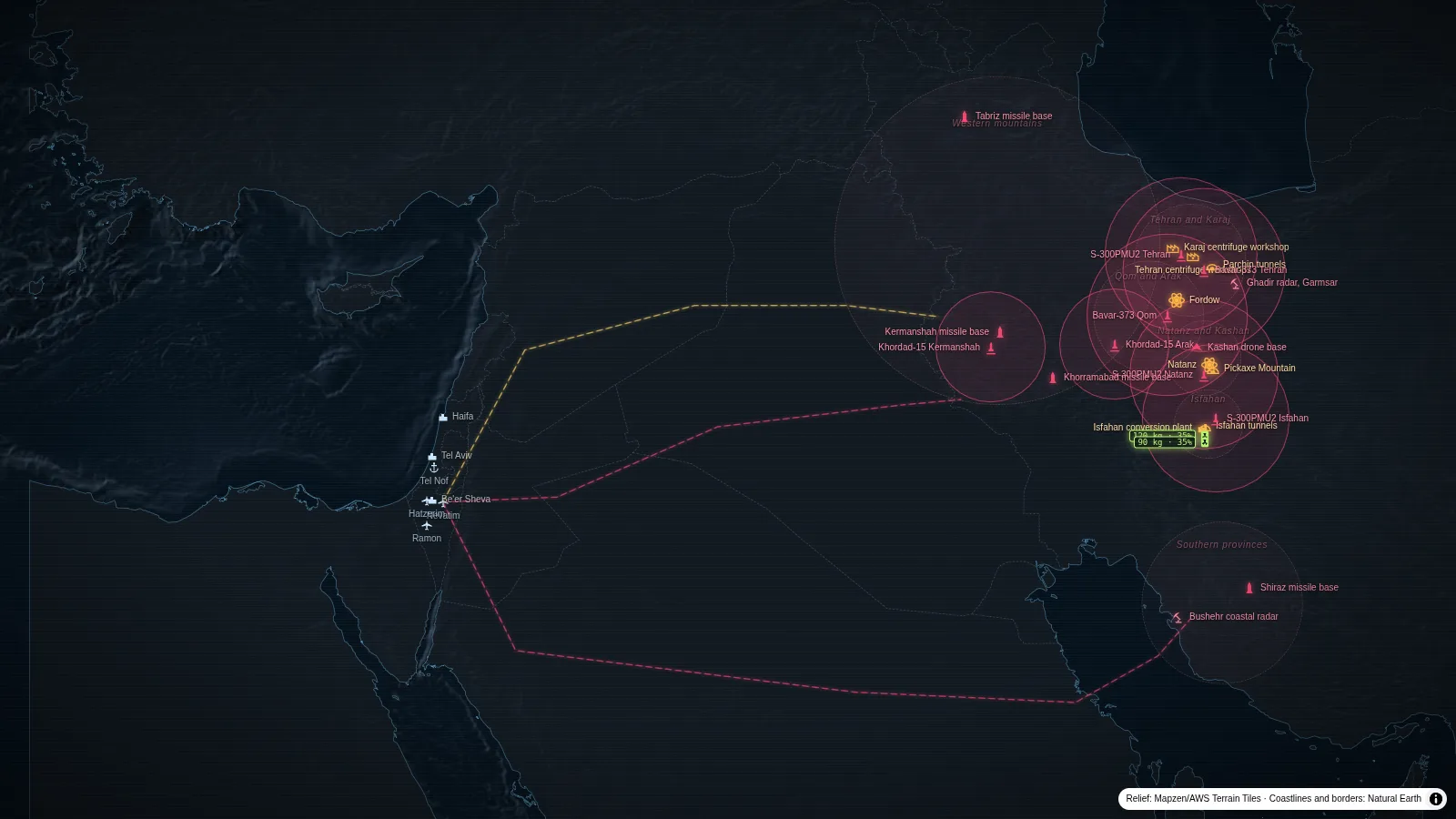
The northern shore holds about 400 kilograms of uranium enriched to 60%, and the plants to take it the rest of the way. You run the strike from the Coastal Republic: scout the sites, take down the S-300s, reach Fordow under its mountain, and send special forces after the material before it disappears.
Breakout climbs every hour the plants keep spinning. The world's patience drains from the moment the first bomb falls. And every missile wave aimed at your cities takes interceptors you can't replace fast enough. Plan in the pause, then watch it play out.
Satellite passes and agents on the ground, while the northern shore doesn't know you're coming. Every day you wait, the chance of a leak goes up. The first wave gets surprise; the second doesn't.
The stockpile is split into lots, hidden in tunnels at Isfahan, Natanz, Fordow, Parchin and under Pickaxe Mountain. Strike near it and it goes on the road. Keep a drone overhead and you'll see the convoy leave.
A special forces raid that brings the material home is the best result there is, and the riskiest. Bombing it in place counts for less, and the contamination costs you abroad.
S-300PMU2s, Bavar-373s and a Ghadir early-warning radar. F-35Is, stand-off missiles and jamming take them apart. Go in without that and you'll lose aircrew.
Every package needs tankers, and the tankers are the real limit. The short route crosses the River Republic, the long one the Kingdom. Neither has said yes out loud.
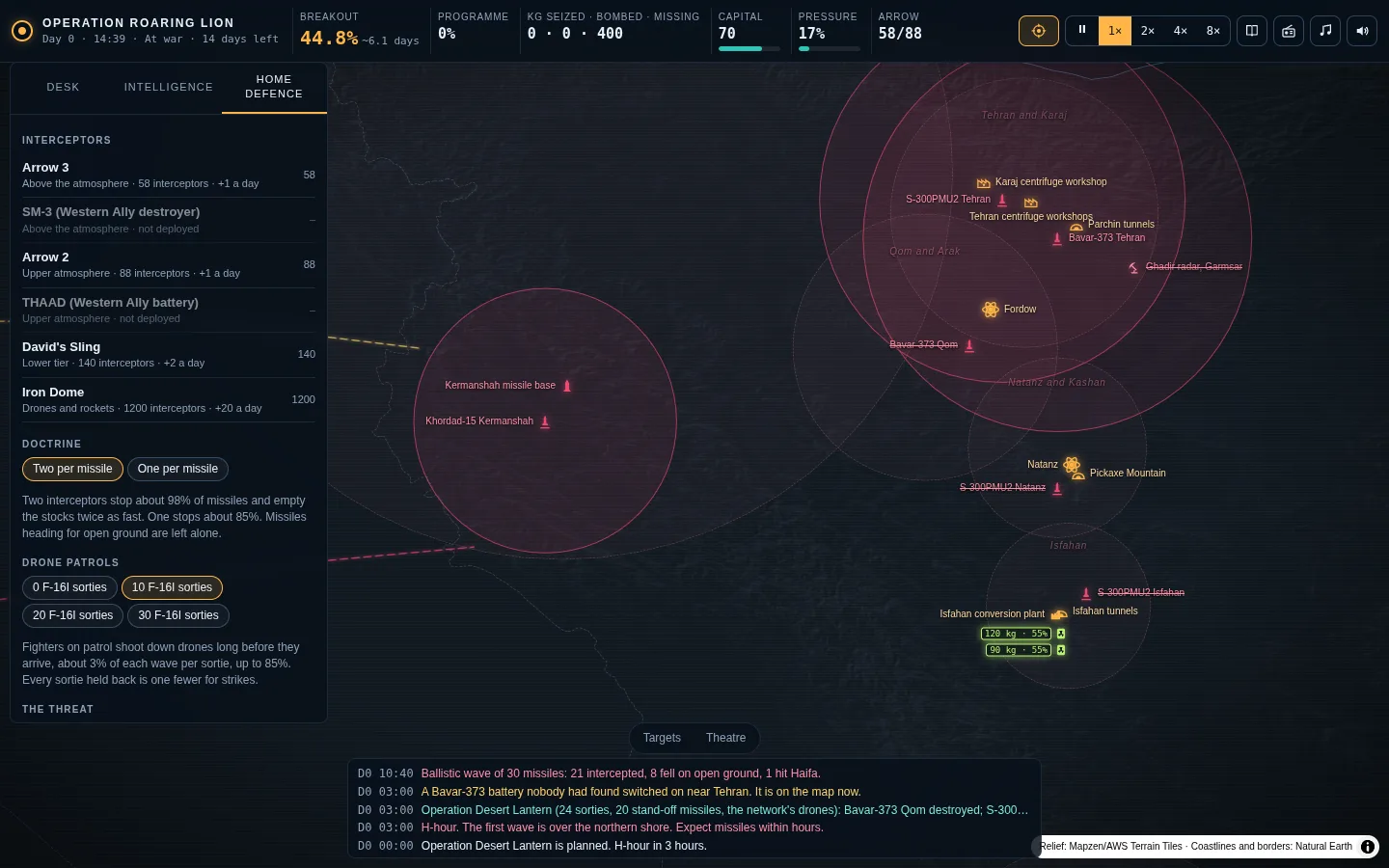
Ballistic missiles in waves and drones by the hundred. Arrow 3, Arrow 2, David's Sling and Iron Dome, with stocks you watch fall. Fire two per missile, or stretch them with one.
A radio net with real brevity: "fence in", "mud spike", "shack", "jackpot". Recorded voices, a modern score that tightens as the clocks run down, and the hum of the room.
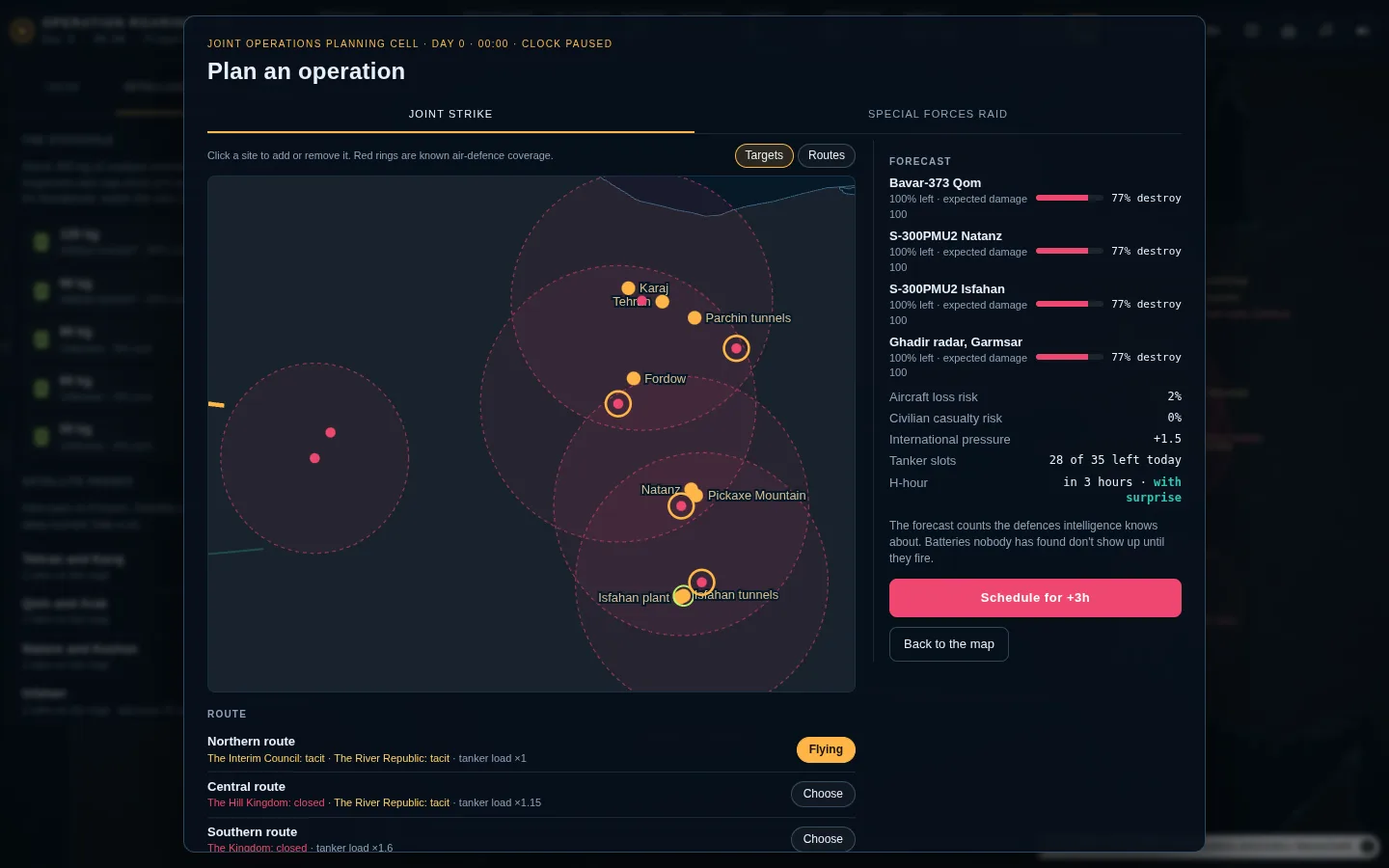
F-35I Adir, F-15I Ra'am with GBU-28s, F-16I Sufa, Boeing 707 tankers, CH-53 helicopters. B-2s with GBU-57s, if the Western Ally agrees. Against them, S-300PMU2, Bavar-373, Khordad-15, and Emad, Kheibar Shekan and Fattah missiles. Ranges, loads and stocks come from public sources; the full catalogue is in the game.
Enrichment halls 80 to 90 metres under a mountain. Nothing in your own arsenal does much there. That's what makes the Western Ally's offer worth waiting for.
About 400 kg at 60%, as last counted by the Atomic Agency. In the game it's five lots, and they don't stay put.
Arrow 3 meets missiles in space, Arrow 2 and David's Sling lower down, Iron Dome and fighters take the drones. The Ally can lend THAAD and an SM-3 destroyer, with strings.
It's a strategy game, not a simulator. Damage, losses and intelligence are resolved statistically, and the numbers are tuned to play well, not to predict anything. The places and the equipment are real. Every nation is named by its role, and every faction, leader and person is invented. It's strategic on purpose: you see sites, sorties and stockpiles, not people.
Take command